
Find People via Monterey Park Residents Directory
Monterey Park has no all-purpose residents roll. The right record depends on your starting clue. An address points first to the Los Angeles County Assessor Portal and its parcel map. A full name might fit a court party search, a deed index request, a license record, or a library collection. An older household calls for a city directory, census page, newspaper, or probate file. Each source answers a different question. A matching name alone proves little. A practical path keeps each record's role separate. An owner is not always the occupant. A permit applicant is not proof of residence. A voter result confirms one supplied combination rather than listing everyone at an address. Start with one anchor fact, then check an independent source whose date and geography make sense. Any Monterey Park resident lookup built this way stays on solid ground.
- Write the exact name or standardized address, plus a date range and one anchor such as an AIN, spouse, middle initial, or case number.
- Use the Assessor Portal or eGIS to identify the parcel, AIN, situs address, and legal-description clues.
- Use the appropriate county index, court search, voter verification, or vital application for the question at hand.
- For an earlier household, make an appointment at the Bruggemeyer Local History Room and compare directories, newspapers, yearbooks, and census schedules.
- When a record is not online, send a narrow request to the department or custodian that actually holds it.
What emerges is a resident directory workflow, not a promise that every person appears. Children, unlisted household members, protected voters, utility customers, and some occupants may simply sit outside public records.
Monterey Park Resident Records Offices
Four record desks anchor a Monterey Park resident search. The Monterey Park City Clerk records council action, elections, ordinances, resolutions, campaign disclosures, and citywide records routing. The Los Angeles County Registrar-Recorder/County Clerk, or RR/CC, keeps recorded instruments, vital records, and county-clerk filings. The County Assessor ties a parcel to tax and situs facts. Los Angeles Superior Court holds case-level party records. Every custodian sets its own access rule.
Los Angeles County RR/CC
Real-estate records since 1850 are indexed by grantor, grantee, and year.
800-201-8999
Los Angeles County Assessor
Address, AIN, parcel, tax, and map facts support the owner-to-parcel bridge.
213-974-2111
Los Angeles Superior Court
Party searches cover civil, family, probate, small claims, and separate criminal services.
County portal
Monterey Park keeps its city-level records work at the City Clerk's office. The office sits inside City Hall, 320 W. Newmark Avenue. The Clerk routes requests to the right desk. Building and Safety, Code Compliance, Police Records, and business licensing each stay with their own department. Name the department, the record type, the subject, and a narrow date range. Then the city has a workable search on its hands.
See the Monterey Park City Clerk information for the city-level records route.
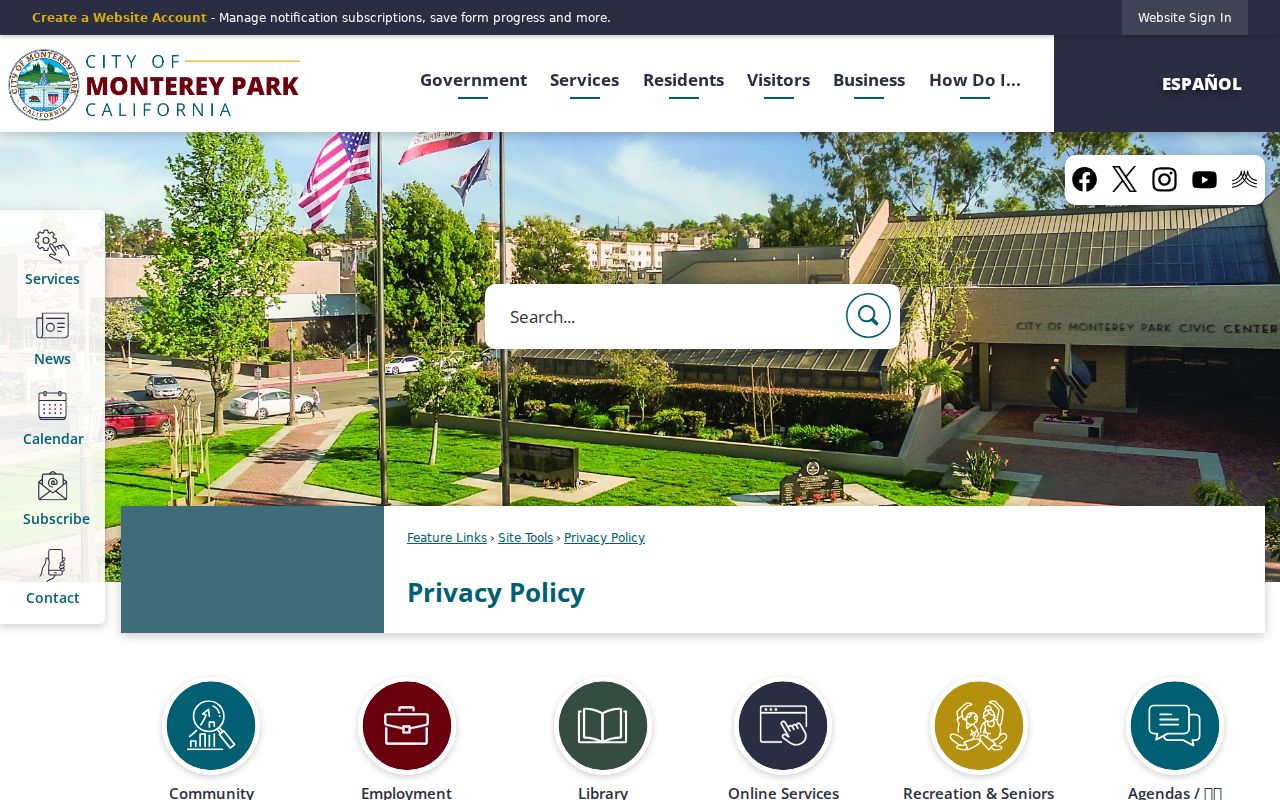
City Clerk files can surface council participants, petitioners, ordinances, and election records. They are not a private-resident roll. When a department's direct search does not surface a record, the Monterey Park public-record request portal serves as the fallback path.
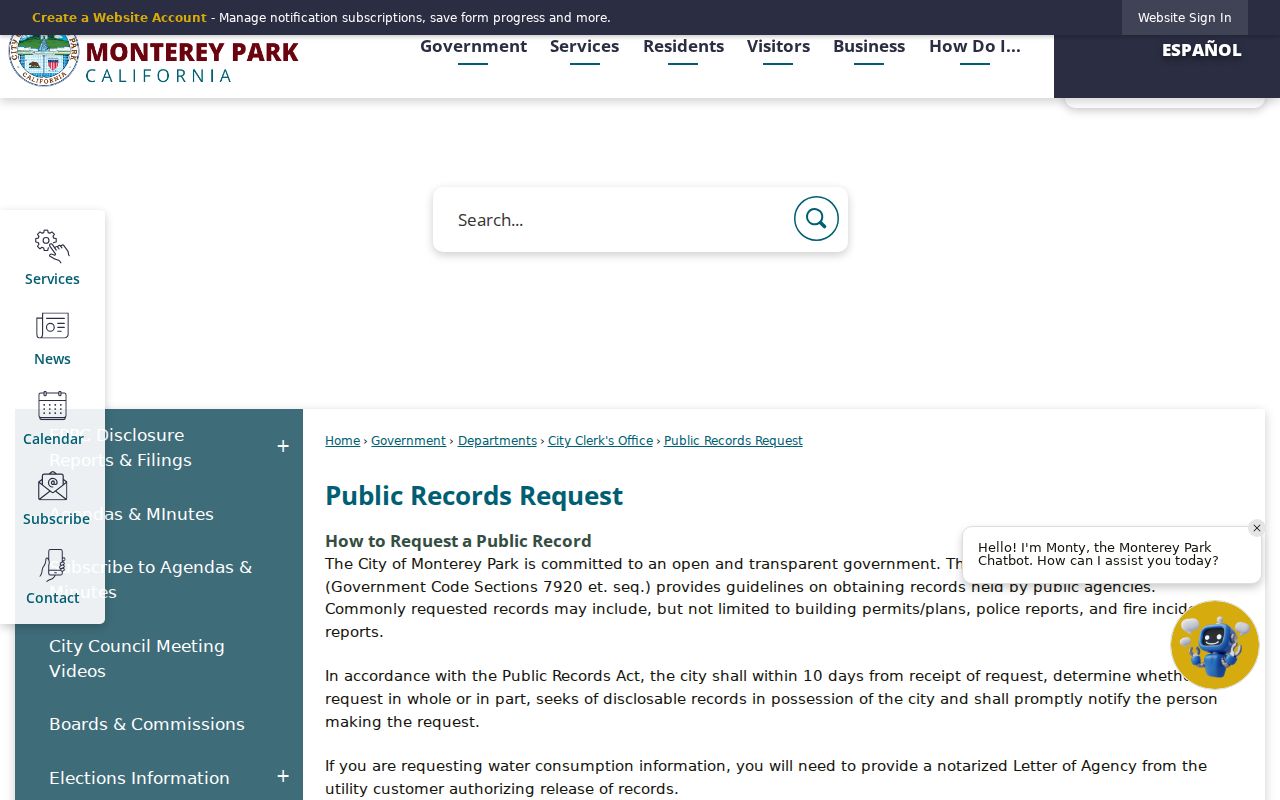
The portal asks for a record description, a department, a date range, contact details, a delivery preference, and attachments where needed. Monterey Park states that it will decide within 10 days whether a request seeks a disclosable record. Plan around that window.
Monterey Park Assessor Address and AIN Search
The Los Angeles County Assessor Portal is the best first bridge. It shines when an address is known. Its visible modes are Basic Search, Legal Search, and Map Search. The main query accepts an address or an Assessor Identification Number. That number is usually called an AIN or APN. That ten-digit number belongs to a tax parcel, not to a person. Before moving on, copy the standardized situs address, parcel clues, transfer indicators, and tract or lot references.
The public internet property search suppresses owner names under county policy. That limitation matters. It stops a browser from treating a parcel result as a complete resident directory. Yet the lawful counter route stays open. A specific property owner question can go to the Assessor by phone, office visit, or the Specific Property channel. Just bring a full address or AIN. A parcel map does not authorize bulk harvesting.
See the Los Angeles County Assessor Property Search for the address and AIN interface. It is the same parcel-first design that opens a Monterey Park search.
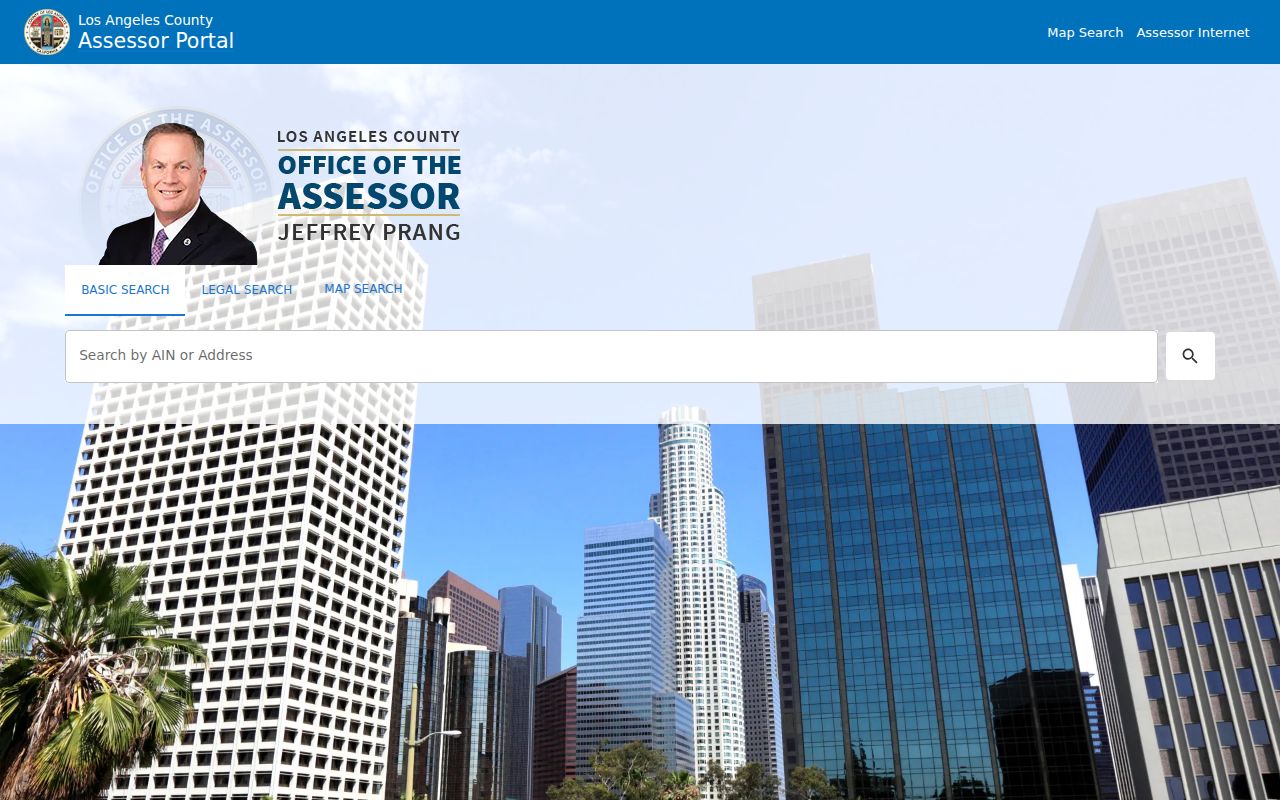
Every Monterey Park Assessor result turns on a stable parcel key. That AIN pins down the property, not the people inside it. To learn who actually lives there, pair the parcel record with a deed, a city directory entry, or another source that answers your real question about past residents of Monterey Park or current ones.
| Property Address | Text or autocomplete; enter street number and name, with city or ZIP to refine. |
|---|---|
| AIN | Numeric or text; use the ten-digit parcel identifier, often displayed with hyphens. |
| Map Browse | Interactive selection for locating a parcel and checking its shape against nearby lots. |
| Search and Clear | Run a specific mode, then reset before testing an address variant. |
- Parcel
- A mapped tax unit identified by an AIN. One address can involve more than one parcel.
- Situs address
- The physical location used on the tax roll, unlike a mailing address used for correspondence.
- Legal description
- The tract, lot, block, or other land description that controls when street text changes.
Monterey Park Voter Verification and Resident Records
Los Angeles County runs a Voter Registration Verification form for personal use. It is a self-check, not a public street roll. The form asks for a last name, birthdate, house number, and ZIP Code, and a match simply confirms that combination and opens election information. A non-match could mean a spelling slip, an old registration, a lagging update, or the wrong county. It never proves someone is absent from Monterey Park.
California keeps its voter files on a tight leash. Addresses, contact details, identification, signatures, and participation fields are protected or restricted to approved purposes. Getting a county or precinct file takes an application, a contract, payment, and a qualifying election, scholarly, journalistic, political, or governmental reason. Commercial use is banned. Unauthorized use can even be a misdemeanor. For verifying one supplied record, the four-field form is the right resident lookup route.
The LA County Voter Registration Verification page shows the four required fields plainly. It suits checking a single record you already hold. Browsing every name at a Monterey Park address is not what it does, so turn to a residents directory or property rolls for that kind of sweep.
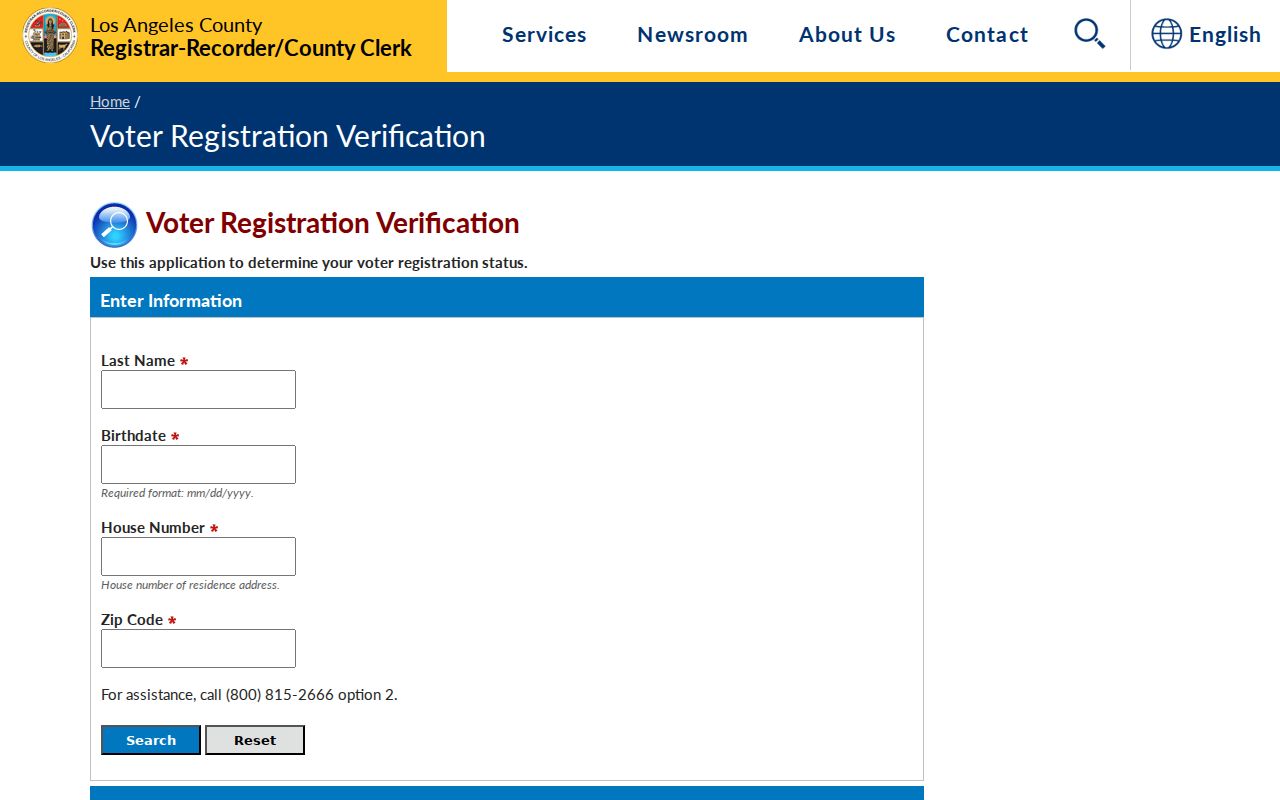
One field swap will not turn voter verification into a Monterey Park residents directory. The registration tool confirms one supplied combination at a time, and that narrow habit is what keeps it from serving as a street directory or neighbor roster.
Current Monterey Park Resident Directories
Scope matters before anything looks like a directory. The Assessor reports land and tax facts. The recorder names the parties to recorded instruments, and the voter tool simply checks a registration combination someone supplies. City and state directories lean toward published municipal contacts, licensees, and business agents, so a true Monterey Park residents directory of private households is not what these current records deliver.
| Source | What It Lists | Keeper | Access |
|---|---|---|---|
| Assessor parcel roll | Situs, AIN, value, use, and transfer clues | Los Angeles County Assessor | Free web search; owner name limited online |
| Recorder index | Grantors, grantees, liens, deeds, and notices | LA County RR/CC | Counter or mail search by party and year |
| Voter verification | Status for one name, birthdate, house number, and ZIP | LA County Registrar-Recorder | Free self-check |
| Municipal contact directory | Published names, titles, departments, and contacts | Monterey Park | Free online directory |
| License and business indexes | Professional, entity, agent, or local business affiliations | California and city offices | Free searches with role limits |
Each record answers a different question. A business address or license location shows affiliation, not residence. A voter result is a status check, not a roster. A deed party could be a seller, lender, trustee, or beneficiary, so the Monterey Park resident lookup workflow earns its keep when one person has to be traced across all these separate roles.
Monterey Park Deed Records Begin Offline
Los Angeles County real-estate records reach back to 1850. Even so, the public RR/CC property index is not an online address search. It is organized by grantor, grantee, and recording year. Gather the AIN and current parcel clues first. Then obtain a likely owner or party name through a lawful channel. Next, ask the recorder for a narrow name-and-year search. A document number or book-and-page citation makes any copy request far easier.
The official access chain runs from free viewing by appointment at Norwalk to counter service in Room 2207. It also includes mail to the Real Estate Records Section at P.O. Box 1130, and online fulfillment once the instrument is identified. Plain copies begin at $5 for the first page and $3 per additional page. Certified copies start at $6, plus $3 per page. A name-and-year search is charged per name and year, with a $1 minimum. Card transactions at the counter carry the stated $1.75 handling fee.
Read the RR/CC real-estate record request route before sending anything. The county copy-order path opens only after that offline index work. That is why the ordering page sits at the end of the chain rather than the start.
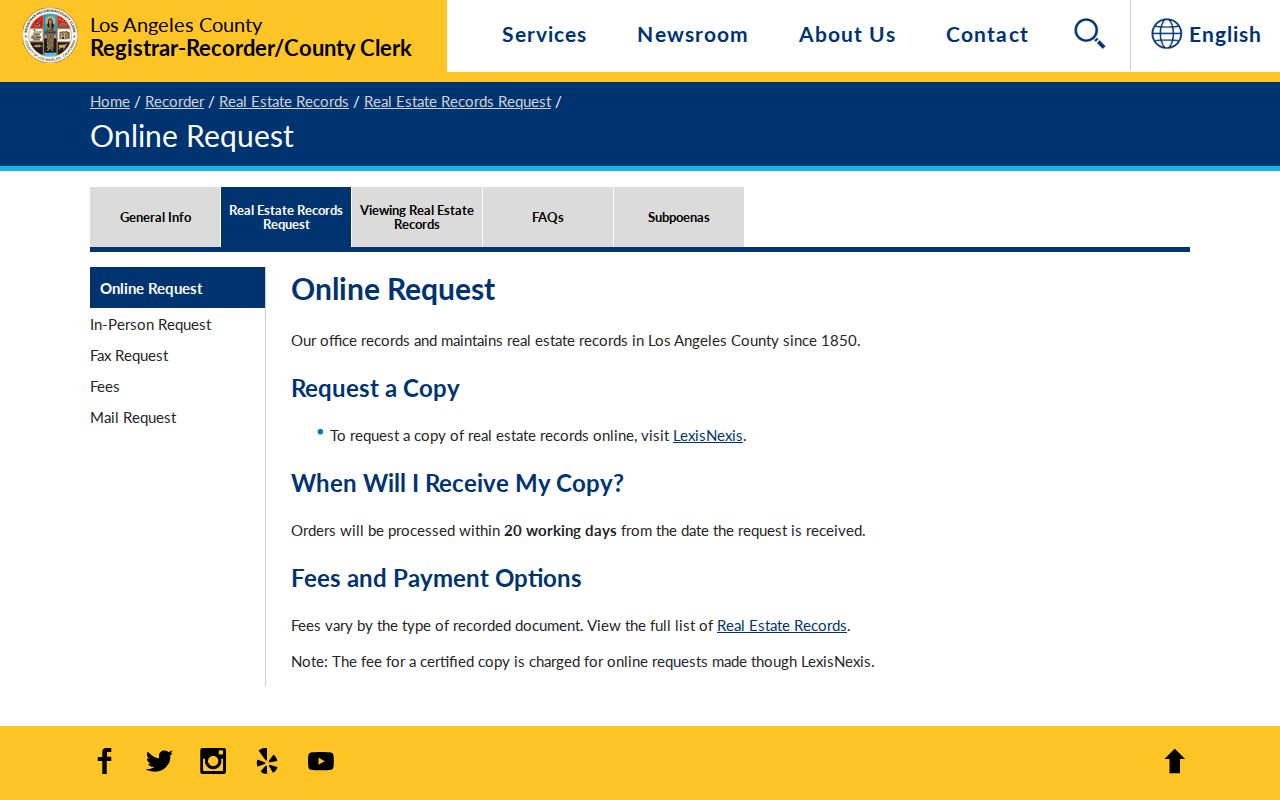
A deed image is an ownership event. It is not an occupant list. Expect grantor, grantee, recording date, document number, legal description, return-to information, signatures, notary details, and transfer-tax statements where nothing is exempt or redacted.
Monterey Park Court Results for Resident Lookup
Los Angeles Superior Court records can corroborate a name, role, date, or family relationship. Court searches are case-based, though. The civil, small-claims, family-law, and probate party search accepts a last or business name, first or middle name, case type, date range, and, where offered, court location. Criminal name search is a separate paid service. Once a case number is known, case access becomes much easier to use. A limited set of document images opens up as well.
A result may show a party name and role, case number, courthouse or district, filing date, case type, status, events, and hearing information. It may also include selected public images. Juvenile, adoption, sealed, confidential, and many family records stay restricted. The Edmund D. Edelman Children's Courthouse in Monterey Park handles confidential juvenile dependency and adoption work. It is not an open resident-name courthouse.
The LASC party search is a paid name discovery tool. Record the case number, then switch to case-number access. The official search page is the useful starting point for that two-stage method.
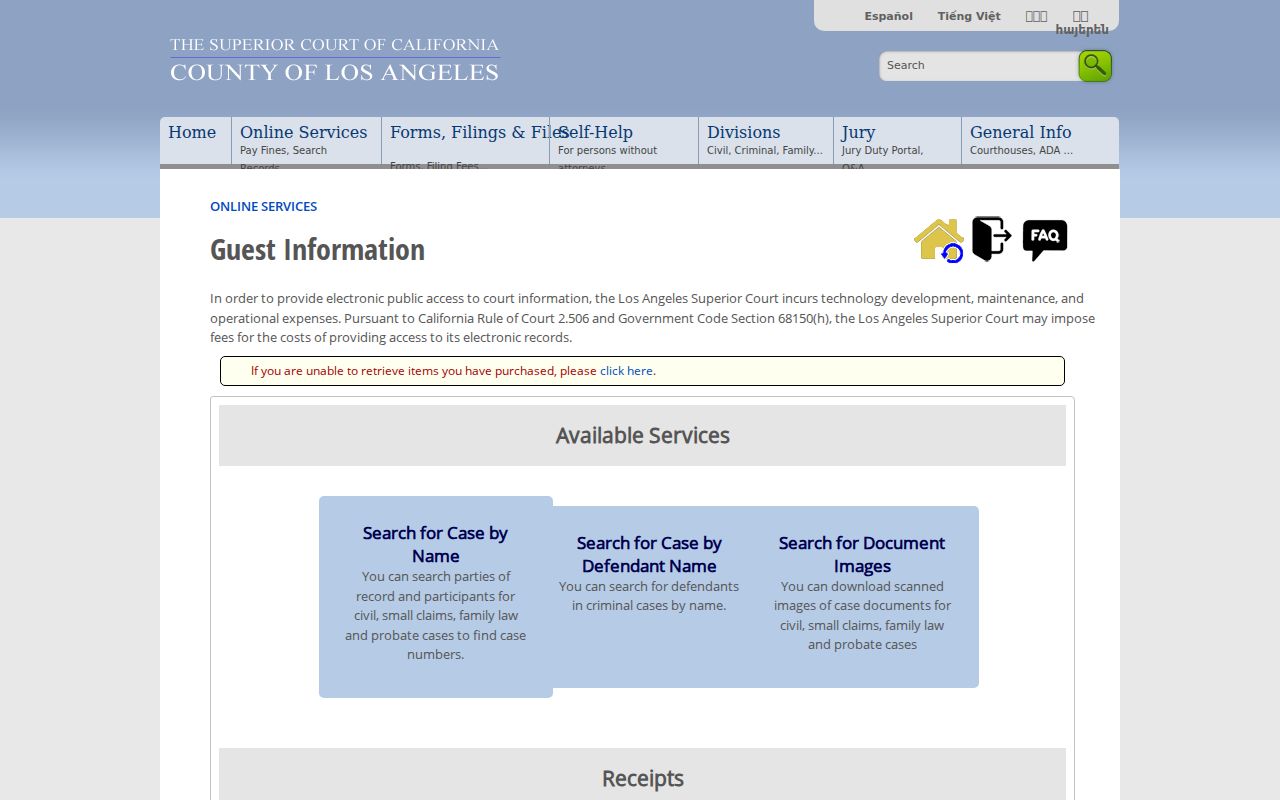
Probate can support lawful heir research. A petition may identify a decedent, petitioner, heirs, and addresses. Pair the filing with a deed or death record rather than treating a court name as a final identity match.
Monterey Park Vital Records and Family Clues
Birth, death, marriage, and divorce records answer family-history questions. California separates an informational copy from an authorized certified copy. Health and Safety Code sections 103525 and 103526 limit authorized copies to listed relationships and roles. An informational certified copy is generally available. It is marked not valid to establish identity, with the basic registration facts. Confidential marriages are restricted to the parties. A court order can also open them under Family Code sections 509 through 511.
Los Angeles County RR/CC handles county events. The California Department of Public Health maintains statewide vital records. The 2026 state fees are $31 for birth and $26 for death. Marriage is $19, and a dissolution certificate is $18. LA County's 2026 birth fee is $34. County birth service covers 1962 to the present except 1972 through 1977 in person. Older and exception-year requests generally go by mail. A mailed authorized copy needs a notarized sworn statement.
Use the California Vital Records application hub for the correct form. A birth application asks for the registrant, event place and date, and both parents' birth names. It also wants applicant contact details, relationship or eligibility, copy type, payment, and signature. Adoption files remain sealed absent the statutory or court process. California's Mutual Consent Program is the lawful route for a birth parent seeking contact. It is not an open birth-parent directory.
Bruggemeyer and the Monterey Park City Directory
Historical Monterey Park resident records live in one place. The Bruggemeyer Library Local History Room is the place to start. The collection runs deep. It includes 181 bound items, three cabinets of microfilm, and Monterey Park city directories. Mark Keppel High School yearbooks and scrapbooks sit there too. Photographs, oral histories, and vertical files round out the shelf. City Council minutes cover 1916 through 2011. Local newspaper titles include the Monterey Park Progress, Cascades, Journal, and Comet. Microfilm also covers the Los Angeles Times, Alhambra Post Advocate, International News Daily, and China News Daily.
Research happens in person by appointment through Reference at 318 S. Ramona Avenue. Published hours are Monday and Tuesday, noon to 8, and Wednesday through Saturday, 10 to 6. The collection page posts no complete list of directory years or publishers. Ask staff for the shelf list instead of guessing at a run of volumes. California Revealed contributes digitized photographs and oral histories. The Historical Society and Museum offer another local-history contact point.
See the Bruggemeyer Local History Room collection page. The official page describes the appointment-based shelf. There, a resident directory entry can be checked against newspapers. School books and oral history help too.
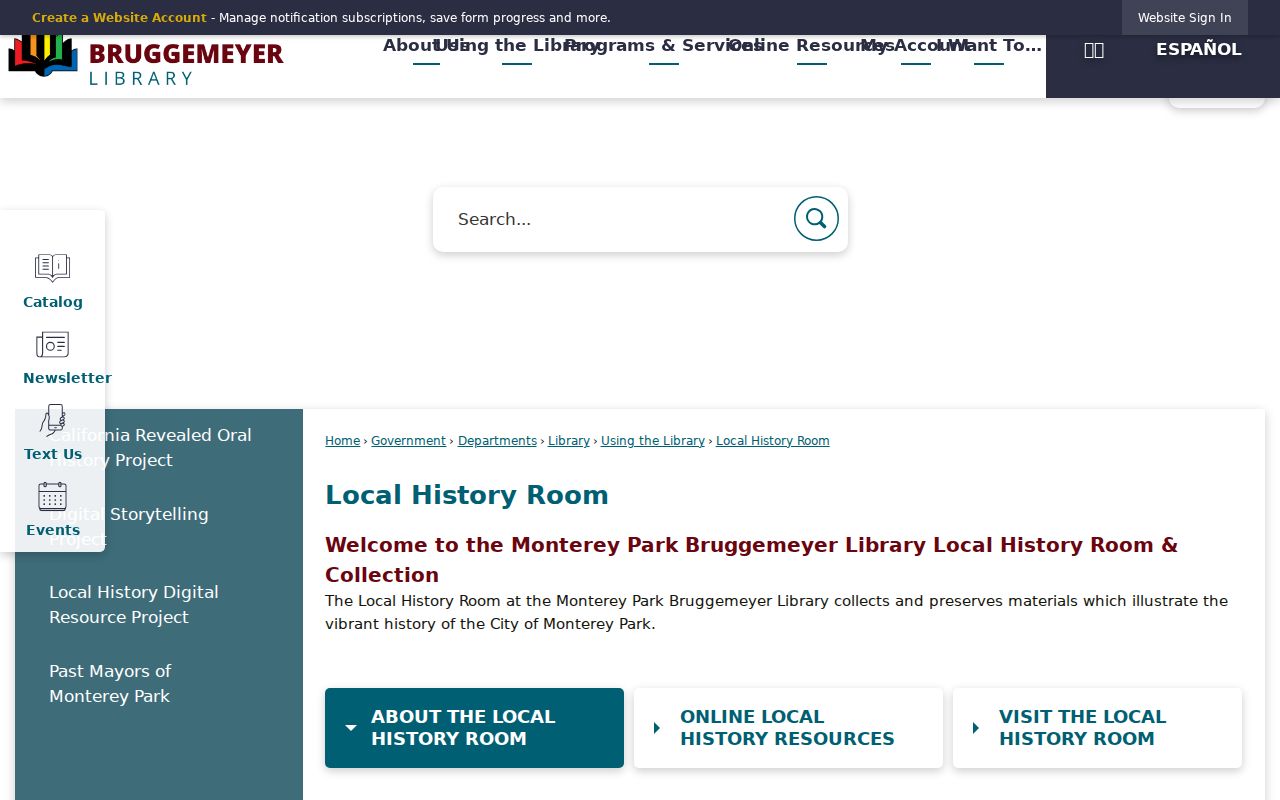
A directory entry typically names a household head, an address, an occupation, a spouse or widow notation, and sometimes a residence-status mark. Treat it as a dated listing. Confirm a title with the recorder, and confirm a life event with a vital, obituary, or probate source.
Monterey Park Names Across Languages
Local history work in Monterey Park demands patience with spelling. The library pioneered catalog searching in Chinese, Japanese, and Korean characters. Its newspaper holdings mix English with Chinese-language titles. A single person may surface under an original script, a romanization family, Western-name order, a hyphenated form, a birth surname, or a spelling with spaces and diacritics. Search each supported form separately, and preserve the exact spelling the record shows.
California's 2026 vital-record change, allowing specified diacritical marks, makes faithful transcription matter even more. An accent or romanization difference does not automatically mean a different person. Match the date, place, spouse, occupation, address, or parcel before combining results.
Business Affiliations in the Monterey Park Directory
When a directory entry links a person to a local business, reach for role-specific sources. Monterey Park business-license records may show the licensee, business name, address, classification, issue or expiration date, and status. Tax and personal details stay withheld. Los Angeles County fictitious-business-name filings answer a different question. The California Secretary of State's bizfile search identifies entities, agents, filing history, and registered addresses. A professional license at the Department of Consumer Affairs adds credential status plus discipline links.
The local license, the FBN, the state entity, and the professional record can carry different names. There are good reasons for that. An owner, agent, officer, licensee, and storefront are not the same role. A business or agent address is an affiliation clue, not proof of a private residence. Preserve the role and the date each source shows. The California DCA license search offers the credential-oriented path.
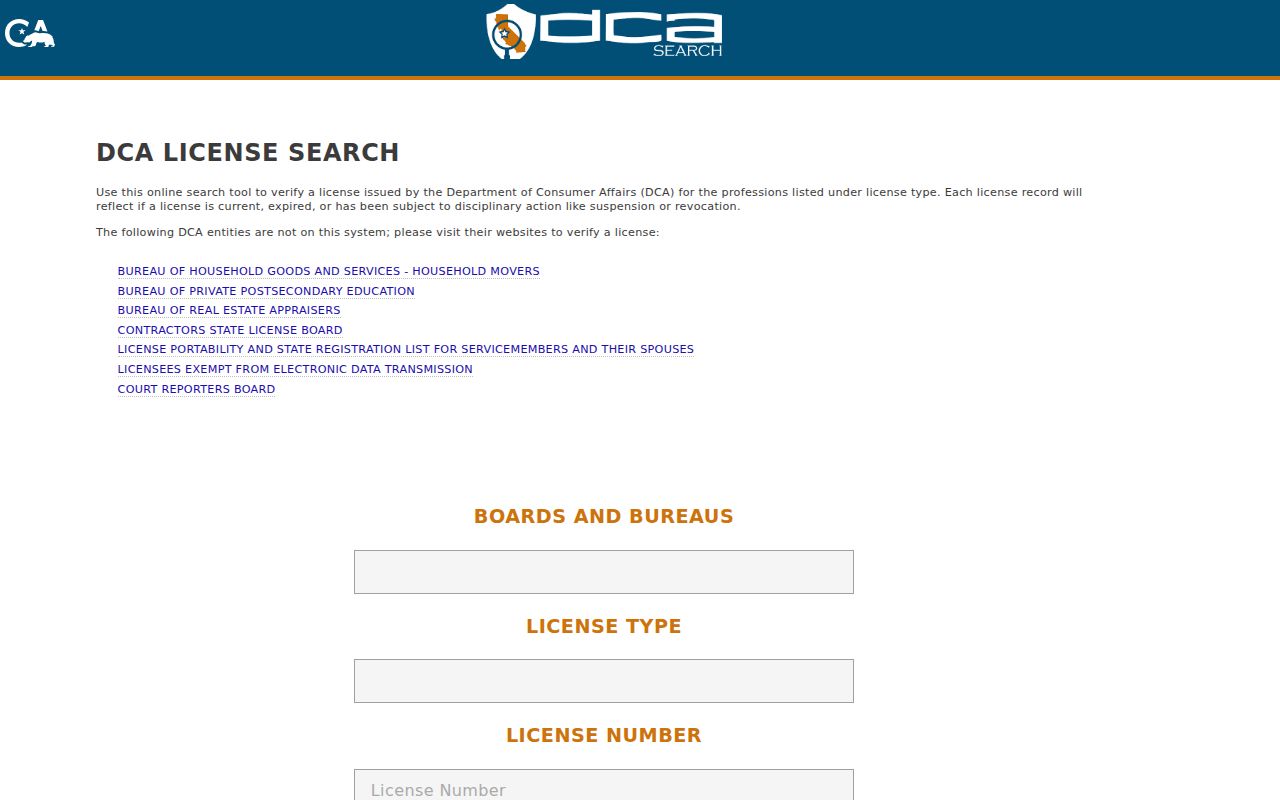
For an entity question, turn to California bizfile Online. Treat the filing as business evidence rather than a resident roll.
Used together, these two official tools can strengthen a business-connection match. Household identity still belongs with the appropriate custodian.
The Alhambra Directory’s Monterey Park Pages
A catalog search limited to “Monterey Park” can pass right by a useful local find. The National Archives list confirms a 1930–31 Alhambra area directory. It covers Monterey Park along with El Monte, Rosemead, San Gabriel, Temple City, and Wilmar. The title reflects how the publisher packaged the region. It makes no claim that Monterey Park belonged to Alhambra. Search catalogs with Alhambra, San Gabriel Valley, and Los Angeles County terms.
A past resident may show up first in an alphabetic section. The same person may appear again in a street-order or criss-cross section. Copy the title-page abbreviation key. Record the address exactly. Then compare the entry with 1930, 1940, and 1950 census pages. A missing year can mean a move or a death. It can also mean an unlisted person, a name variant, or a publication gap.
Privacy Limits on Monterey Park Resident Lookup
California public records are not a license to assemble every household detail. Safe at Home gives qualifying people a substitute mailing address. Voter information is purpose-restricted, and the Driver's Privacy Protection Act guards DMV data. Utility customer identity, children, and unlisted residents sit outside an ordinary resident lookup. Many police, juvenile, medical, adoption, and sealed court details also sit outside it.
Use the CPRA, Government Code sections 7920.000 and following, to make a narrow, identifiable request. Direct it to the agency holding the record. The normal initial determination comes within 10 calendar days. Unusual circumstances can bring a written 14-day extension. Privacy, active-investigation, privilege, and record-specific exemptions still apply.
Lawful personal use. Monterey Park records can support genealogy, house history, civic research, and reconnecting with people through appropriate channels. Do not use a record to stalk, harass, threaten, or harm anyone.
Verify a match with the custodian and a second dated source. A careful Monterey Park residents directory search protects accuracy and the people in the records alike.
Historical Monterey Park Resident Directories
Printed directories, library shelves, and old newspapers each hold a different piece of Monterey Park's past. The Bruggemeyer collection pairs city directory volumes with microfilm. It also holds yearbooks, council minutes, oral histories, and newspapers. The 1930–31 Alhambra directory helps too. Every record answers a slightly different question. A city directory may list an occupant along with an occupation. A census reveals how household members were related. A deed marks a single transfer of title. When a household trail goes cold, an obituary or probate filing often explains why.
Let each record play its own role as you trace a family or a street address. For current parcel questions, bring the AIN and the legal description to the recorder's name-and-year index. For older names, pack your spelling variants. Then head to the library catalog and the newspaper reels. The historical Monterey Park residents directory works best when every entry carries a date, a source, and a second record. Use that second record to confirm it.