
Monterey Park City Directory Collections
Monterey Park's directory trail is scattered, not complete. The Bruggemeyer inventory names a collection of Monterey Park City Directories but publishes no exact volume years or publishers. The gap belongs in any answer. Ask Reference for the shelf list instead of borrowing dates from a neighboring city's catalog.
| Collection | Years | Where Held | Access |
|---|---|---|---|
| Monterey Park City Directories | Exact volume years and publishers not published | Bruggemeyer Local History Room | Appointment through Reference; request a shelf list |
| Alhambra-labeled regional directory | 1930-1931 | NARA directory list, microfilm, or a library archive | Includes Monterey Park and nearby cities; inspect the volume |
| City Council minutes | 1916-2011 | Bruggemeyer Local History Room | Appointment; civic names, petitions, and project context |
| Mark Keppel yearbooks and scrapbooks | Dates not enumerated online; yearbooks documented to at least 1940 | Bruggemeyer Local History Room | Appointment; students, faculty, and activities |
| Local newspapers and microfilm | Most local holdings 1900s-present; title runs not published | Bruggemeyer Local History Room | Appointment; notices, obituaries, addresses, and events |
| California Revealed oral histories | Interviews from the 1990 program onward | Online collection and library | Long-time residents and past mayors in their own voices |
| Federal census | Public 1790-1950; Monterey Park trace principally 1920-1950 | NARA, FamilySearch, and library databases | Household, relationship, birthplace, occupation, and enumeration geography |
| Sanborn maps | Monterey Park-specific year list not located | Library of Congress and California libraries | Footprint, use, and address clues only; no local sheet is claimed |
A known collection and an unknown run sit apart in the table. A city directory shows an occupant or business. It is not a deed. Census pages place a household at an enumeration geography, while council minutes and newspapers add civic and community context. Pick the source that matches the question. Record the catalog label exactly as written.
Bruggemeyer Monterey Park Directory Room
For bound Monterey Park directories, the Bruggemeyer Library Local History Room is the place to start. Find it at 318 S. Ramona Ave., Monterey Park, CA 91754. Reference staff answer at 626-307-1368, and physical research requires an appointment. Hours run Monday and Tuesday from noon to 8 p.m., then Wednesday through Saturday from 10 a.m. to 6 p.m. Call ahead, since the collection page lists the directory set without naming every volume.
The room keeps 181 bound items and three cabinets of microfilm. Beyond directories, its shelves hold Mark Keppel High School yearbooks, scrapbooks, clippings, photographs, and City Council minutes from 1916 to 2011. Newspapers on hand include the Monterey Park Progress, Cascades, Journal, and Comet. Microfilm reaches further, with the Los Angeles Times, International News Daily, Alhambra Post Advocate, and China News Daily.
Insider tip. Ask Reference for the city-directory shelf list and any reverse-section notes when making the appointment. The missing year and publisher inventory is a research gap, not permission to guess.
The Alhambra City Directory Includes Monterey Park
Monterey Park entries can hide under another city's cover. The National Archives list of circa-1930 city directories includes a 1930-31 Alhambra volume. That single book also packs in El Monte, Monterey Park, Rosemead, San Gabriel, and Temple City. Wilmar is in it too. A catalog search limited to the words Monterey Park can fall short. It may overlook a useful city directory filed under Alhambra.
Search the area label, not just the city name. Do this across NARA, WorldCat, FamilySearch, and library catalogs. Open the volume and go slowly. Read the title page, contents, and city list. Then check any street or reverse section before judging a name or address absent. The label is regional. The evidence is still local. The cover simply records where the compiler placed Monterey Park in that edition.
The National Archives directory list is the route to this cataloging clue.
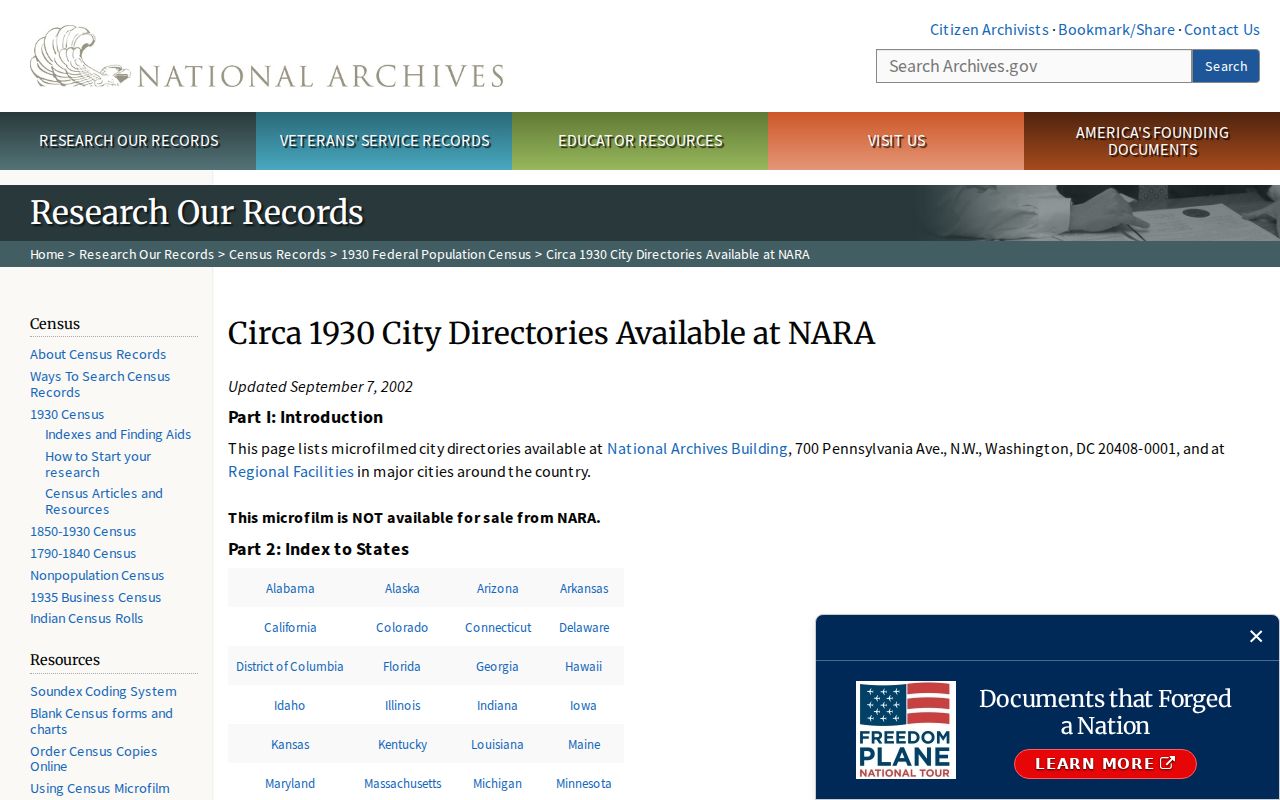
The NARA reference confirms the Alhambra label and the included cities. It offers no local sample entry or publisher run.
Myth check. A city directory is not always filed under the city that appears in an entry. Search the surrounding regional title, then verify the local page and address.
Monterey Park Digital Directory Sources
The local history trail also has online doors. The library's Local History Digital Resource Project combines photographs, slides, postcards, and clippings from the library and historical society. Its Monterey Park History Collection spans 1885-2001. California Revealed adds oral histories funded or recorded from the 1990 program onward, including long-time residents and past mayors. These are community voices and visual evidence, not a searchable current resident roll.
Begin with the California Revealed Bruggemeyer collection, then search the library catalog and ask Reference about items that remain available only in the room. The online collection can supply a name, place, event, or street clue that sends a later search back to a printed directory.
The California Revealed Bruggemeyer collection is shown here as an access point for Monterey Park history.
Oral histories take a name past the thin fields of a directory entry. Neither source stands alone. A past mayor or long-time resident may describe a street, a business, or an era in the first person. Check the two against each other.
Older government records offer another route. The California State Archives catalogs local-government series. It also answers reference questions. That is not proof it holds a Monterey Park city directory run. Use the California State Archives catalog and services for a targeted search. Name the agency, date range, and record type you want. When a city or county record was transferred, the archive is the natural first stop. The custodian must still confirm what actually sits on the shelf. The State Archives services page serves as the lead-in for the image below.
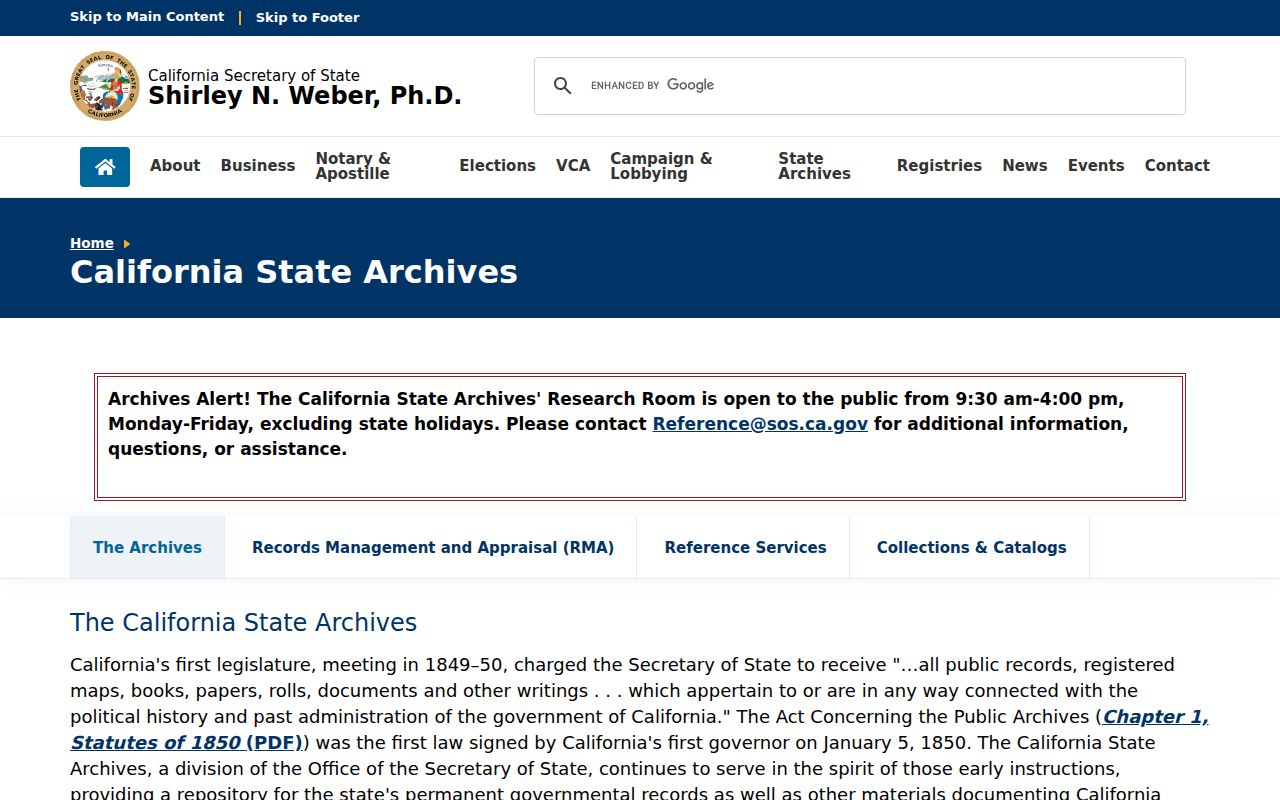
That distinction keeps a catalog lead apart from a confirmed volume. It matters when years and publishers stay unpublished.
Reading a Monterey Park City Directory Entry
A historical entry packs several clues into a line or two. Read the heading and abbreviation key first. Copy the name, spouse notation, street address, trade or occupation, business address, and any residence-status mark exactly as printed. Never expand an abbreviation from memory. The publisher's key controls the meaning for that volume.
| Name | Surname, given name, and initial; the listed householder may not be every household member. |
|---|---|
| Spouse or widow notation | A spouse may appear in parentheses; a widow notation can mark a family link or change in household status. |
| Trade or occupation | The directory may record an occupation and a business association as historical context. |
| Home address | House number and street, with a home marker or other publisher shorthand. |
| Business address | A second address can point to a storefront or office and should not be treated as a home. |
| Residence-status symbol | Some runs identify this status with a symbol. Confirm its meaning in that edition's key. |
- Criss-cross directory
- A reverse or street-order section that starts with an address and points back to a listed name, when the volume includes one.
- Householder index
- An index organized around the named head or householder rather than every person who may have lived at the address.
- Abbreviation key
- The publisher's guide, usually near the front matter, that defines symbols and short forms. Photograph or transcribe it before reading entries.
Monterey Park Names in Directory Catalogs
Names in Monterey Park records rarely appear in one form only. The city's library automated its catalog in 1995. It described the system as an early U.S. public-library catalog supporting vernacular Chinese, Japanese, and Korean lookup. That variety matters. Try original characters alongside romanization. Try Western-name order, spacing and hyphen variants, and diacritics too. Where a Spanish-language family record carries a birth surname, keep that surname intact.
Never merge two directory entries just because a surname matches. Compare the address, spouse, school, language form, and date before treating them as one person. A later California vital record may preserve a more faithful spelling. That is because specified diacritical marks are now permitted under the recent state change. The historical directory, though, still gets copied exactly as printed. The Monterey Park departmental directory shows an official contact list. It differs from a private resident roster.
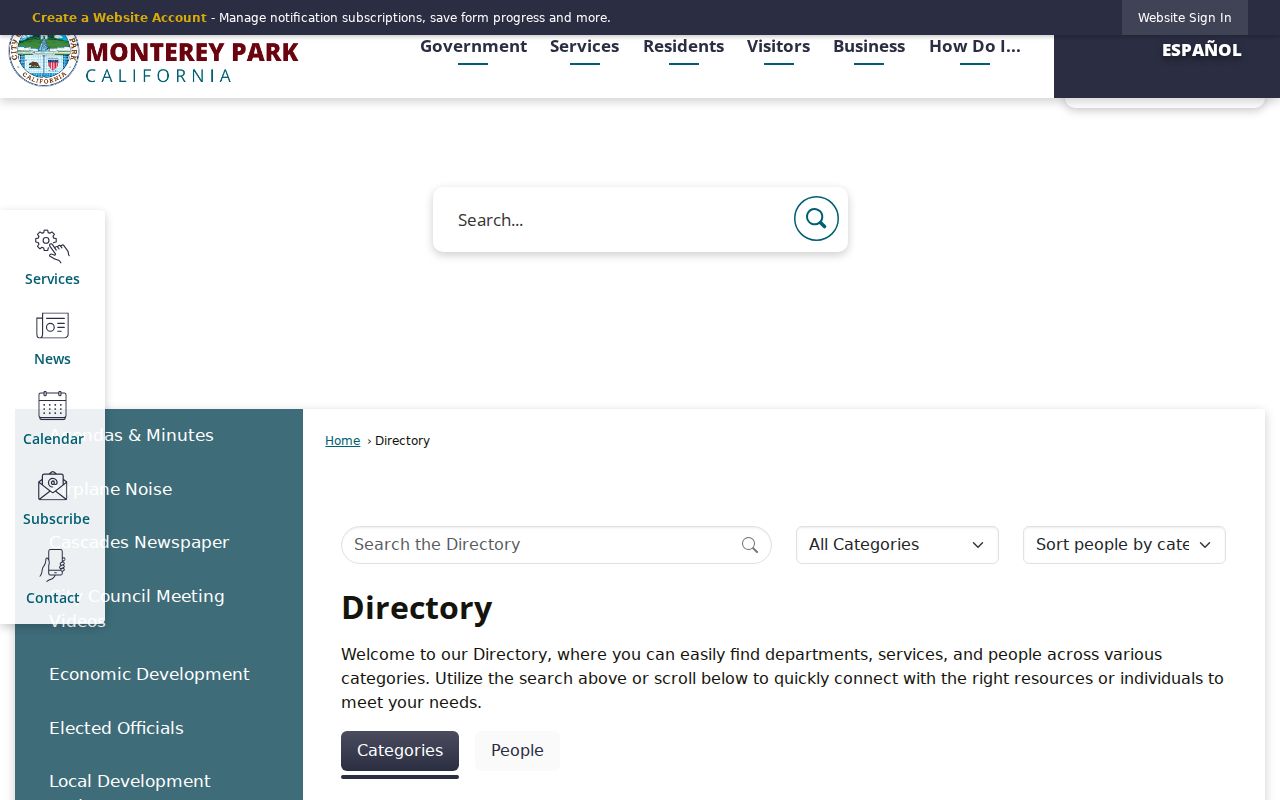
Routing matters as much as spelling. A departmental contact list can steer a records request to the right office, while the Bruggemeyer collection supplies historical names and community context for the same search.
Monterey Park Directories Beside Yearbooks
A second local source can explain the move or name change behind a Monterey Park directory entry. Mark Keppel yearbooks and scrapbooks identify students, faculty, activities, and school-era spellings. Council minutes surface officeholders, petitioners, commissioners, and project participants. Neither proves residence alone. Keep any stated address or civic role separate from a verified household entry.
Newspapers add the dates and relationships a directory omits. Bruggemeyer microfilm holds the Monterey Park Progress, Cascades, Journal, and Comet, plus the Los Angeles Times, International News Daily, Alhambra Post Advocate, and China News Daily. Search a name together with its address. When a household disappears, follow up with an obituary, probate file, or later census page.
The Monterey Park Historical Society and Museum sits at 781 S. Orange Ave. Hours run Saturday and Sunday, 2 to 4 p.m. Weekday tours happen by appointment. The reference number is 626-307-1267. Ask before assuming the museum holds a particular directory volume.
Monterey Park's Directory Timeline
Record geography shifts as the city does. Monterey Park incorporated in 1916. Before and after that line, county land records and earlier census work may use ranch, subdivision, or neighboring-place labels. Use these checkpoints to match a directory search to the right catalog layer.
- 1850: Los Angeles County real-estate instruments begin, long before a Monterey Park city government series.
- 1916: Monterey Park incorporates, and the local council-minute trail begins in the library collection.
- 1919 to 1960: the local library grows from an early room to a dedicated 1929 building and the facility later dedicated at the current site.
- 1930-31: the NARA area directory is labeled Alhambra while including Monterey Park.
- 1940: Mark Keppel yearbooks are documented back to at least this year, although continuity is not confirmed.
- 1950: the latest currently public federal census schedule supplies a major household comparison point.
- 1995 to 2010: vernacular catalog search and the Local History Digital Resource Project expand name and image discovery.
No official source lists every Monterey Park directory publisher. Complete volume years are missing too. So are Monterey Park-specific Sanborn sheet years. Report those limits plainly instead of filling the gaps with a likely-looking date.
Tracing Monterey Park Households
Start family history with one surname and one year. Skip the broad name sweep. A city directory can anchor a household between census years, yet a missing entry may mean a move, death, spelling change, missed edition, or simple non-listing. Pair every finding with a source built through a different creation process.
- Choose the closest confirmed year and copy the alphabetic name entry, spouse notation, address, occupation, and every symbol from the page.
- Check the preceding and following editions, if available, and record each address change instead of treating a gap as proof of departure.
- Use a reverse or criss-cross section when the volume has one. Compare nearby numbered addresses, but do not infer an entire block from one entry.
- Pair the directory with the 1920, 1930, 1940, or 1950 census page and its enumeration district. Compare household members, ages, birthplace, and address geography.
- Search the Bruggemeyer newspapers, yearbooks, oral histories, obituary material, or probate record for the endpoint, then verify ownership separately through the deed and assessor trail.
Sometimes a directory trail narrows to one address. Then the Monterey Park previous residents workflow begins with the parcel and follows the deed chain rather than assuming the listed occupant held title. Title and occupancy are different facts. Keeping them apart makes the household history precise.